When I first worked in Crawley Down the village was in East Sussex and the local people used to grumble that the postal town, which we were supposed to include in our addresses, was Crawley, in West Sussex. It still is, of course. But it had not always been so, for in the earliest local directories it was noted that letters arrived from and were dispatched to East Grinstead daily. However, those directories make no mention of Crawley Down at all, the residences, such as the Grange, Huntsland and the Duke’s Head, simply being described as in Worth.
Back in the early 1800s people paid to receive letters rather than to post them, a change that did not come in until 1840 with the introduction of the ‘Penny Post’ and the celebrated Penny Black. Before then, a post office was merely the place to which you brought the letters you wanted to send, for them to be collected and taken to the local main post office, which was in East Grinstead. Although there had been one since about 1805 Crawley Down’s first known ‘post office’ was the house called Chandlers, just south of the railway bridge on the Turners Hill Road. It was built in 1834 and, like local post offices to day, served as a shop as well. At that time there was no village to speak of. The railway line had yet be laid, the church and the school had yet to be built and just along the road to the north stretched a few hundred acres of common land (see Crawley Down in 1829). There was a house opposite belonging to a Mr Milligan (see The house before Bankton) and a couple of old cottages behind. The road that passed in front of Chandlers was a turnpike, with a tollgate a hundred yards to the south.
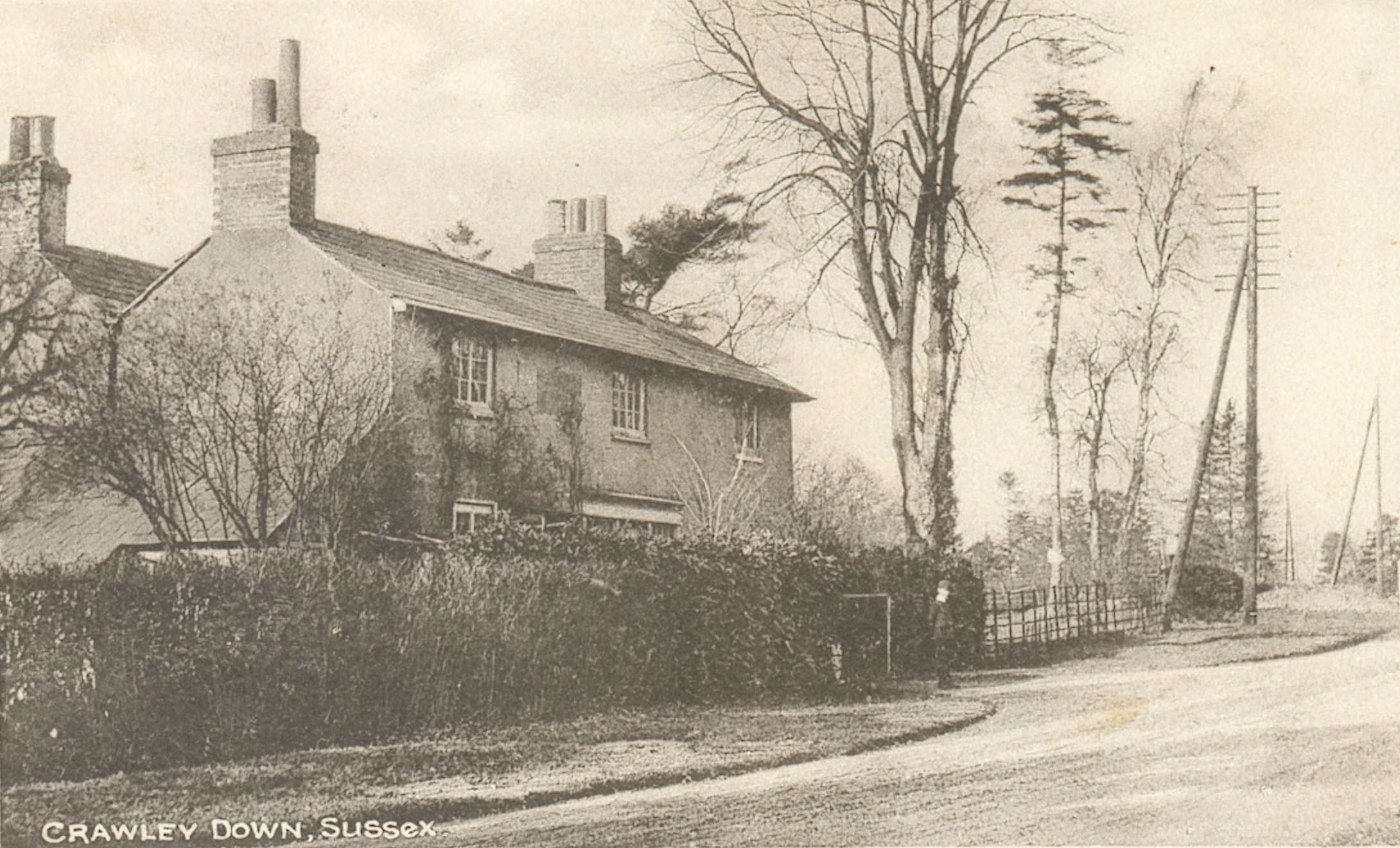
Benjamin Chandler is noted as a ‘letter receiver’ in Melville & Co’s directory in 1858 but in Three Bridges, so perhaps he had opened a shop there; by that date there was a railway station, and perhaps it was considered more appropriate to have a post office nearby. Chandler was still described as a grocer and draper so maybe his shop on the Turners Hill Road remained open. However, in the 1861 census the sub-post master was named as John Brinkhurst, living at ‘Crawley down House’. He was also described as a nurseryman. We can identify this house as what is now called ‘Down Cottage’, and Brinkhurst, still with his nursery, was still there ten years later, and in Kelly’s Directory of 1874 he was named as receiver of letters. John Brinkhurst died later that year, aged 78, and responsibility for the village’s post was taken over by his daughter Mary, while her brother Charles took over the nursery. Mary remained in that role at Down Cottage until at least 1891.
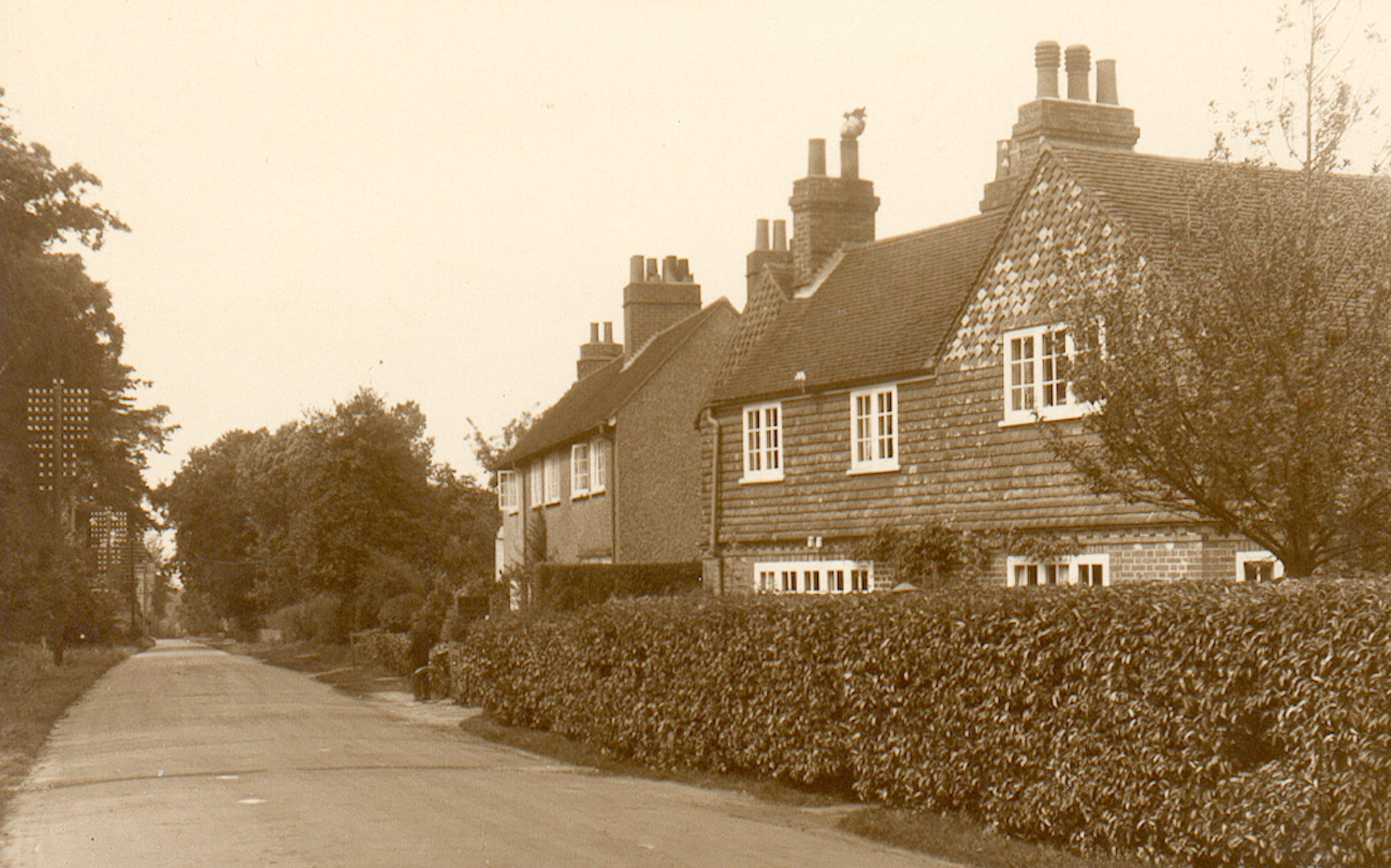
In that year T. H. W.Buckley, who owned The Grange, acquired the neighbouring property and erected a purpose-built post office. Mary Brinkhurst’s nephew Charles took over as post master, while his father continued the nursery business at Down Cottage next door. Mr Buckley became the landlord of the post office until his daughter Edith sold it to Elizabeth Flint in 1931. She sold it to John Potter in 1945 and after he died in 1949 his widow leased it to her sister-in-law, Bertha Potter, for the next 21 years. In 1961 it was sold to R. G. A Richards.
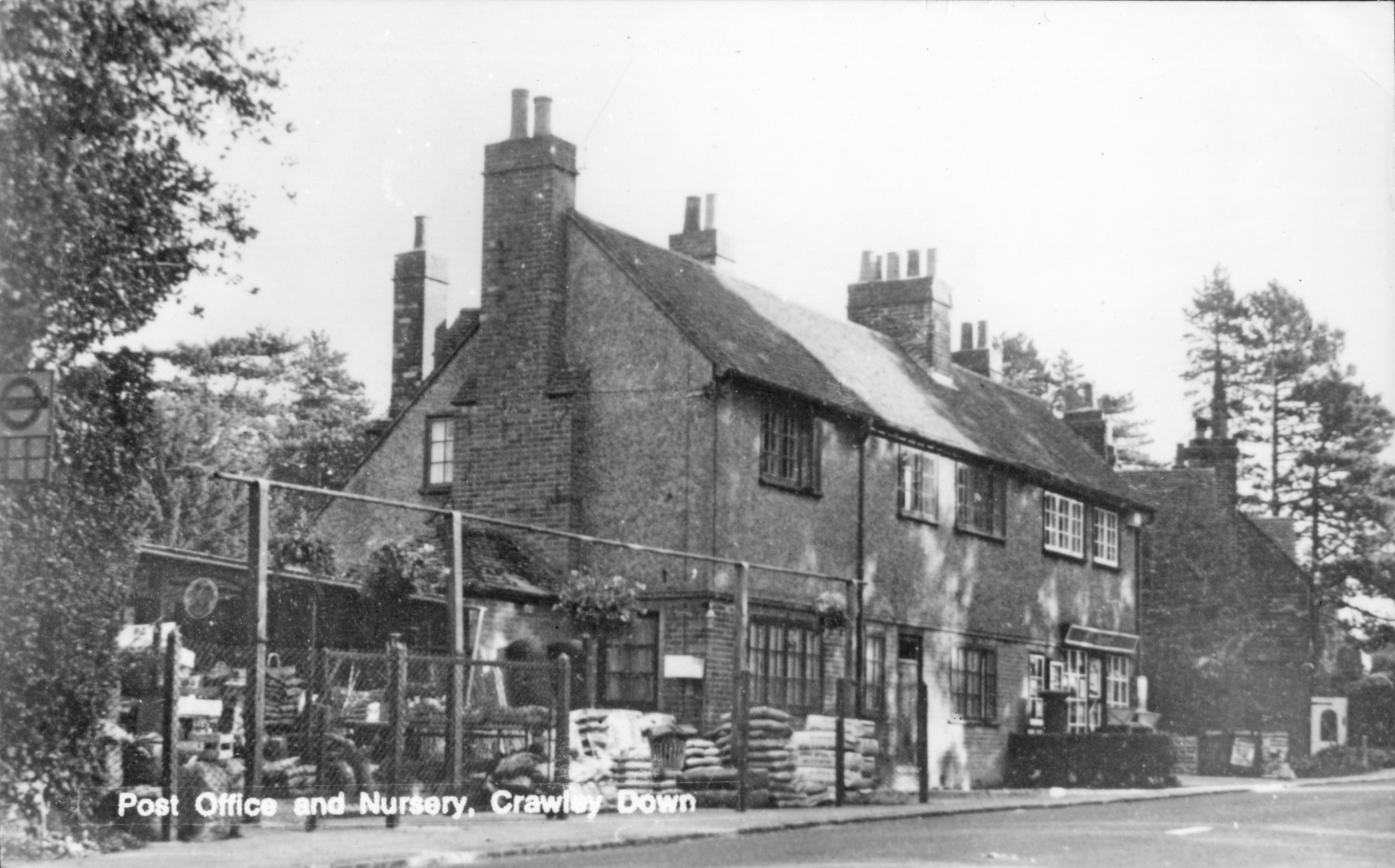
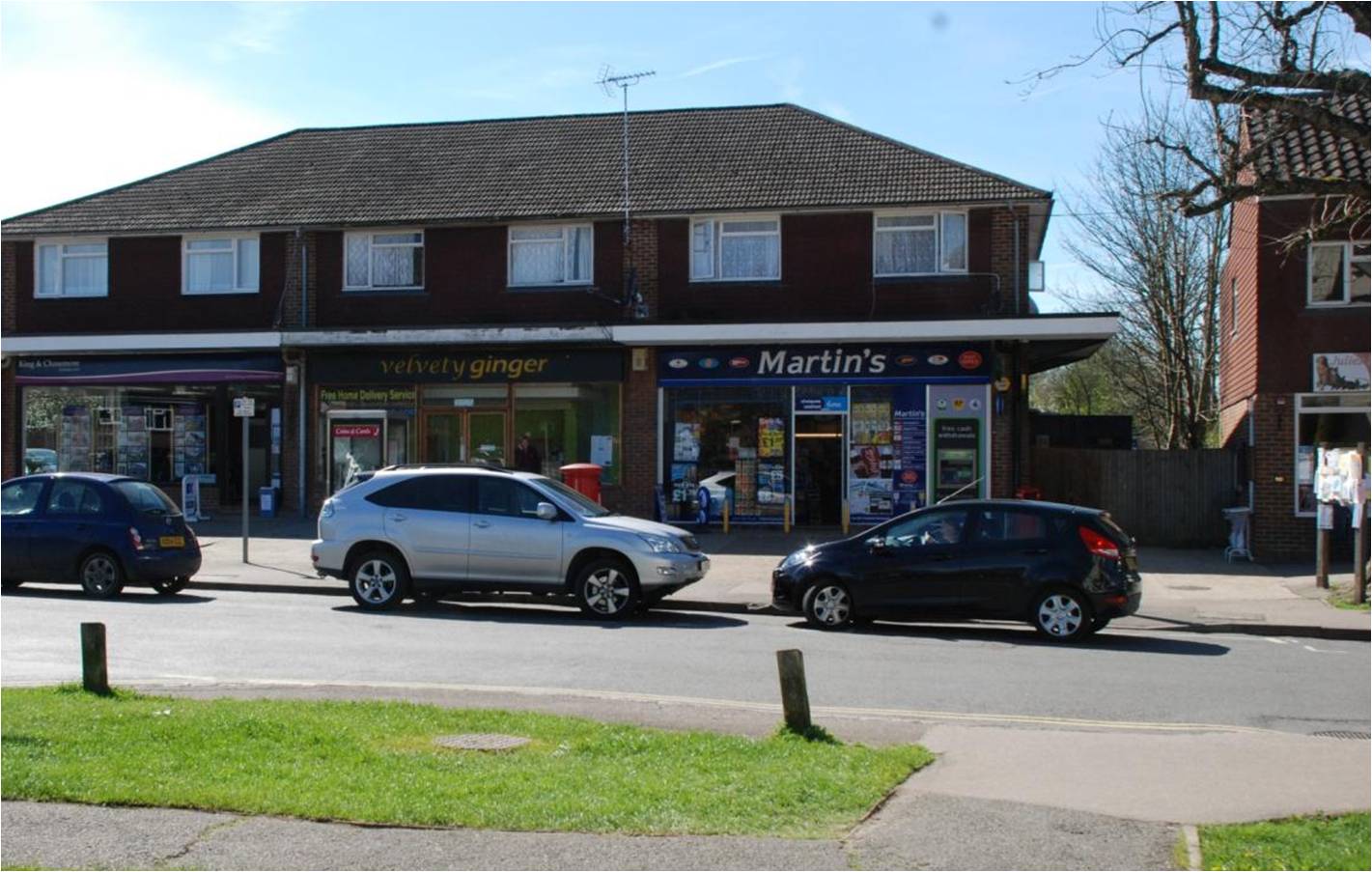
During the early 1970s Crawley Down was growing as a village with the commencement of the Burleighwood Estate, and the centre of the village was shifting to the southern end of the Village Green where there was already a cluster of shops, and where, after the demolition of the railway station a new row of shops was being built that would include a newsagent, greengrocer, estate agent, hairdresser and pharmacy. In 1976 the post office, which had been located near the western end of Sandy Lane for about 120 years, closed and a new one opened where it remains to this day.
The old post office has been a private house since 1977.