
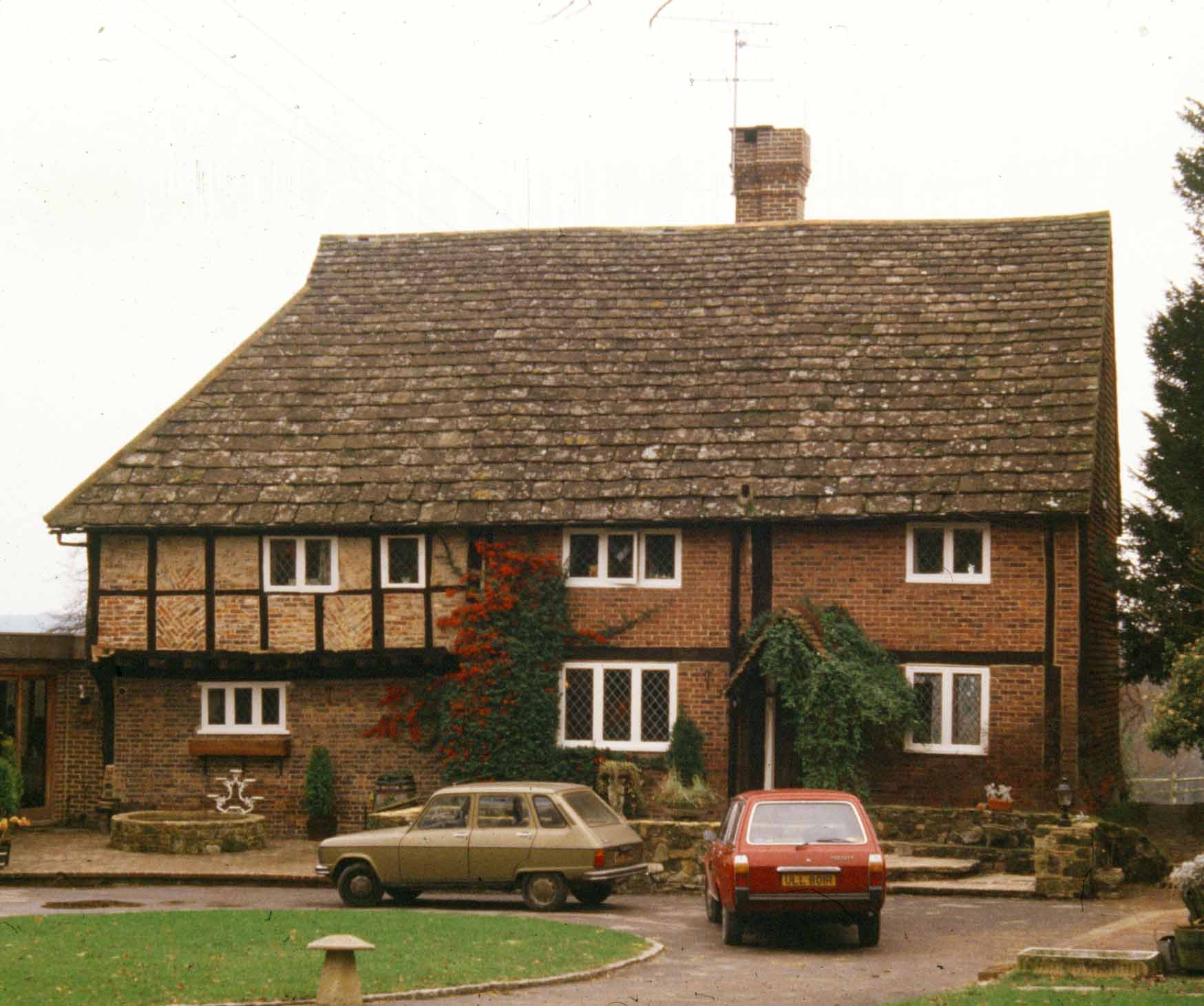
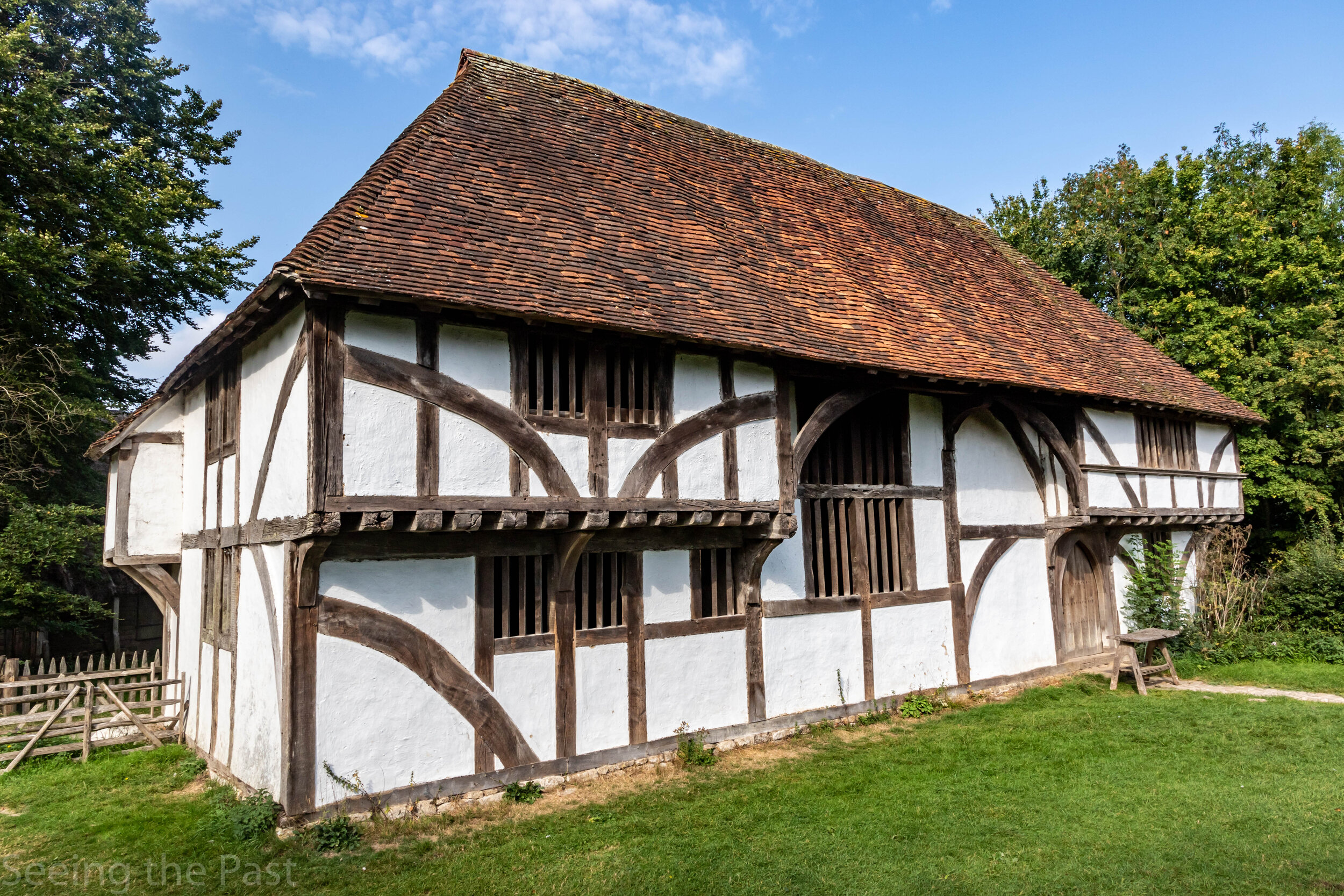
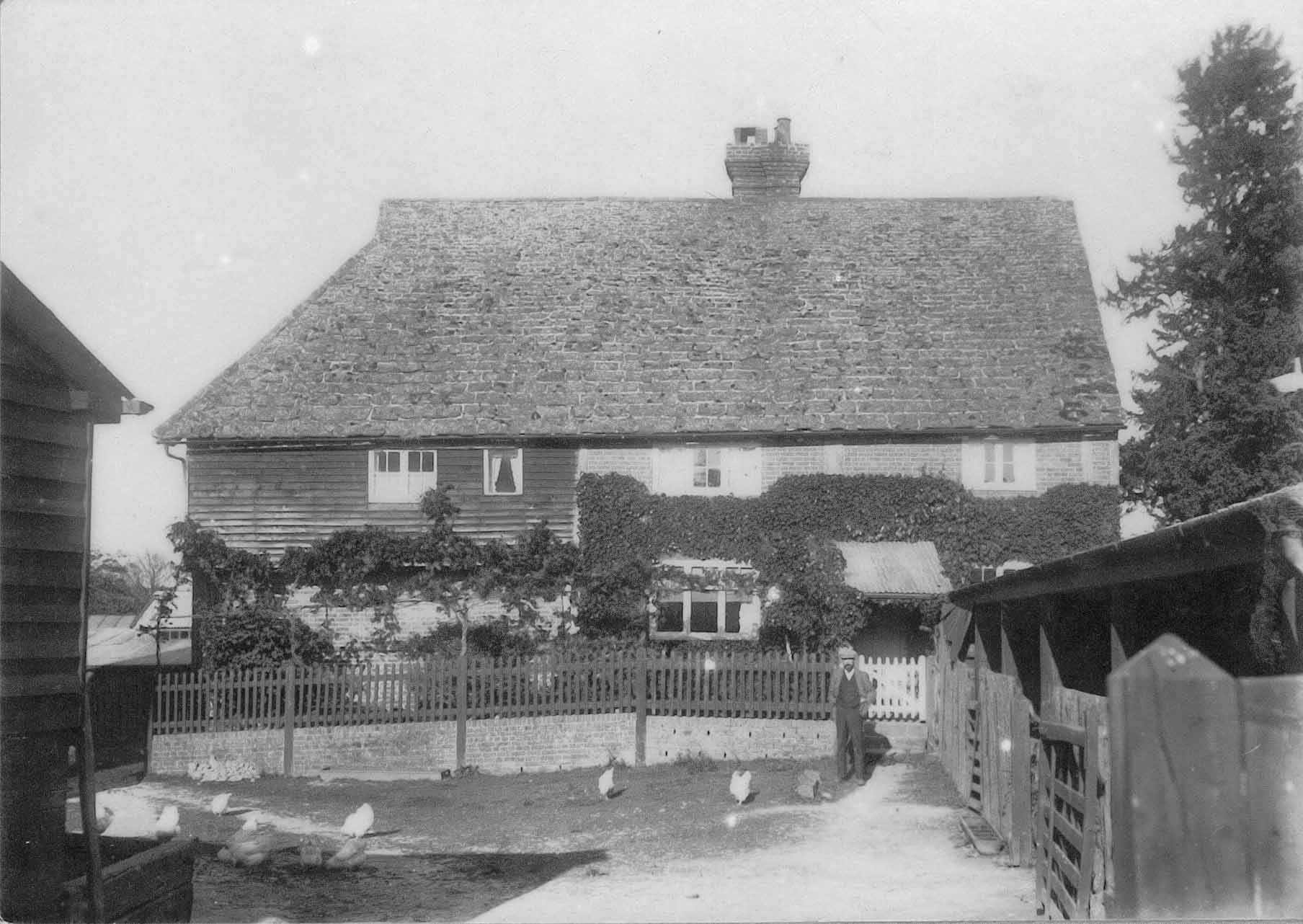
Although Crawley Down did not begin to develop as a village until the mid-19th century, there were several long-established farms in the area with farmhouses that, in some cases, date back to the Middle Ages. The oldest is Sandhill, which lies (no surprises) at the far end of Sandhill Lane. Recent dating by dendrochronology (measuring the tree rings of wooden beams) has shown that the trees used to build Sandhill were felled at the end of 1385, when Richard II was king, and the house was probably erected in the following year. It is what is known to students of vernacular architecture as a ‘Wealden’ hall house. That is to say it had a large central hall with no upper floor that was open to the rafters, and at each end two storeys with the upper floor jutting out, or ‘jettying’, on the front and ends of the house. If you have visited the Weald and Downland Living Museum at Singleton, north of Chichester (and it is well worth a visit) you will have seen a fine example of a ‘Wealden’ house called Bayleaf. Sandhill was just like it originally but at some time in the past the southern end of the house was destroyed, though from what cause is not known.
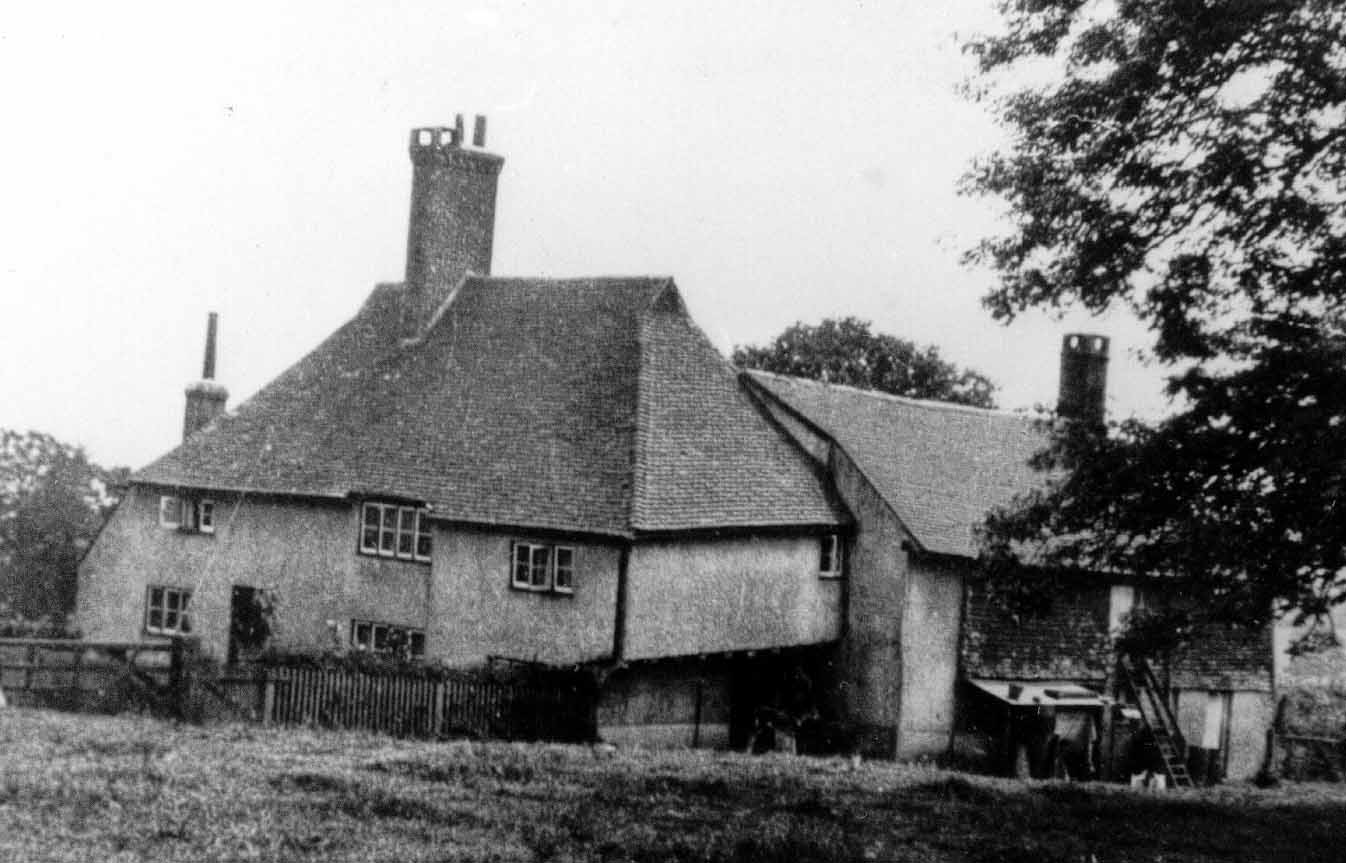
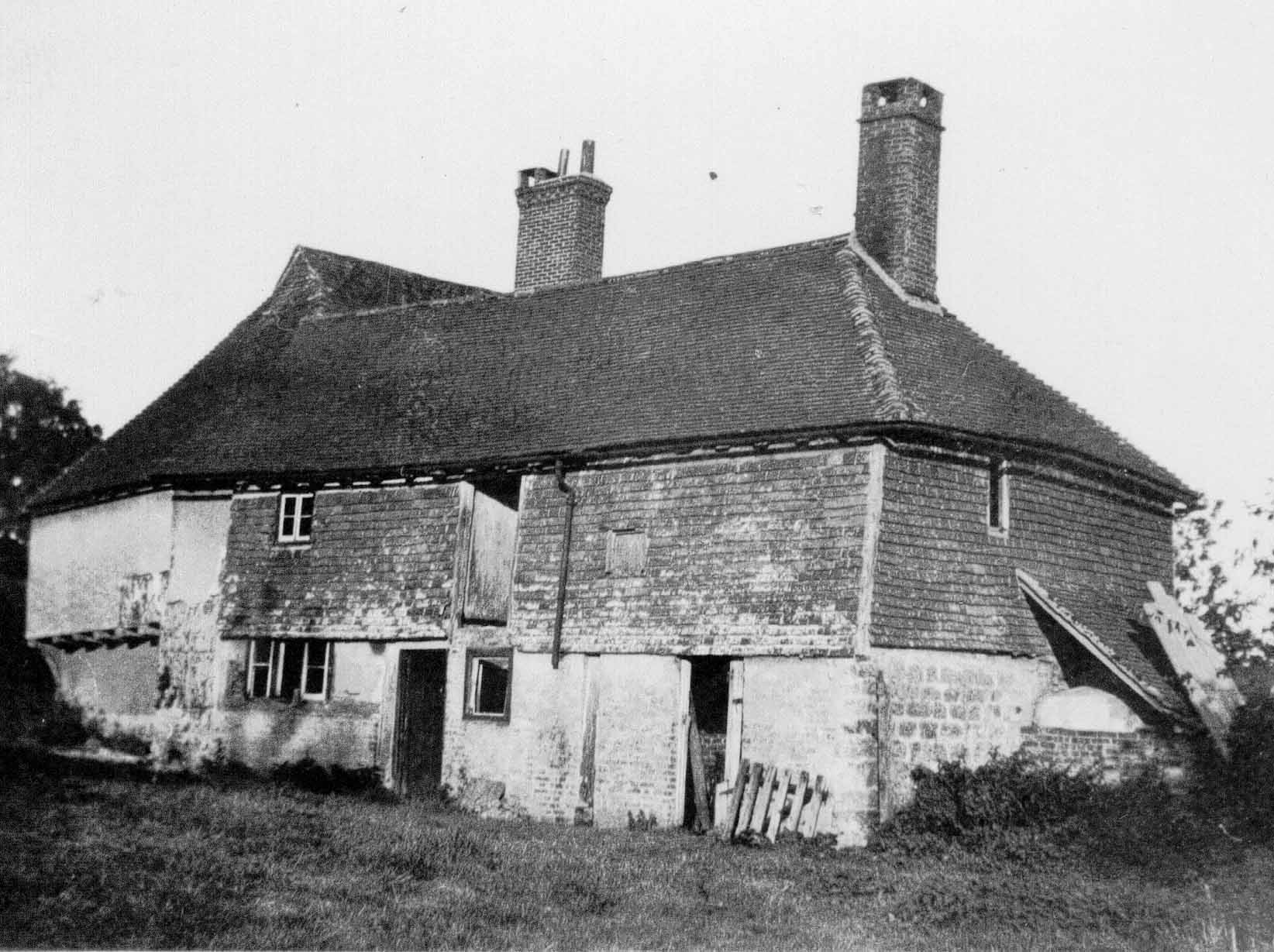
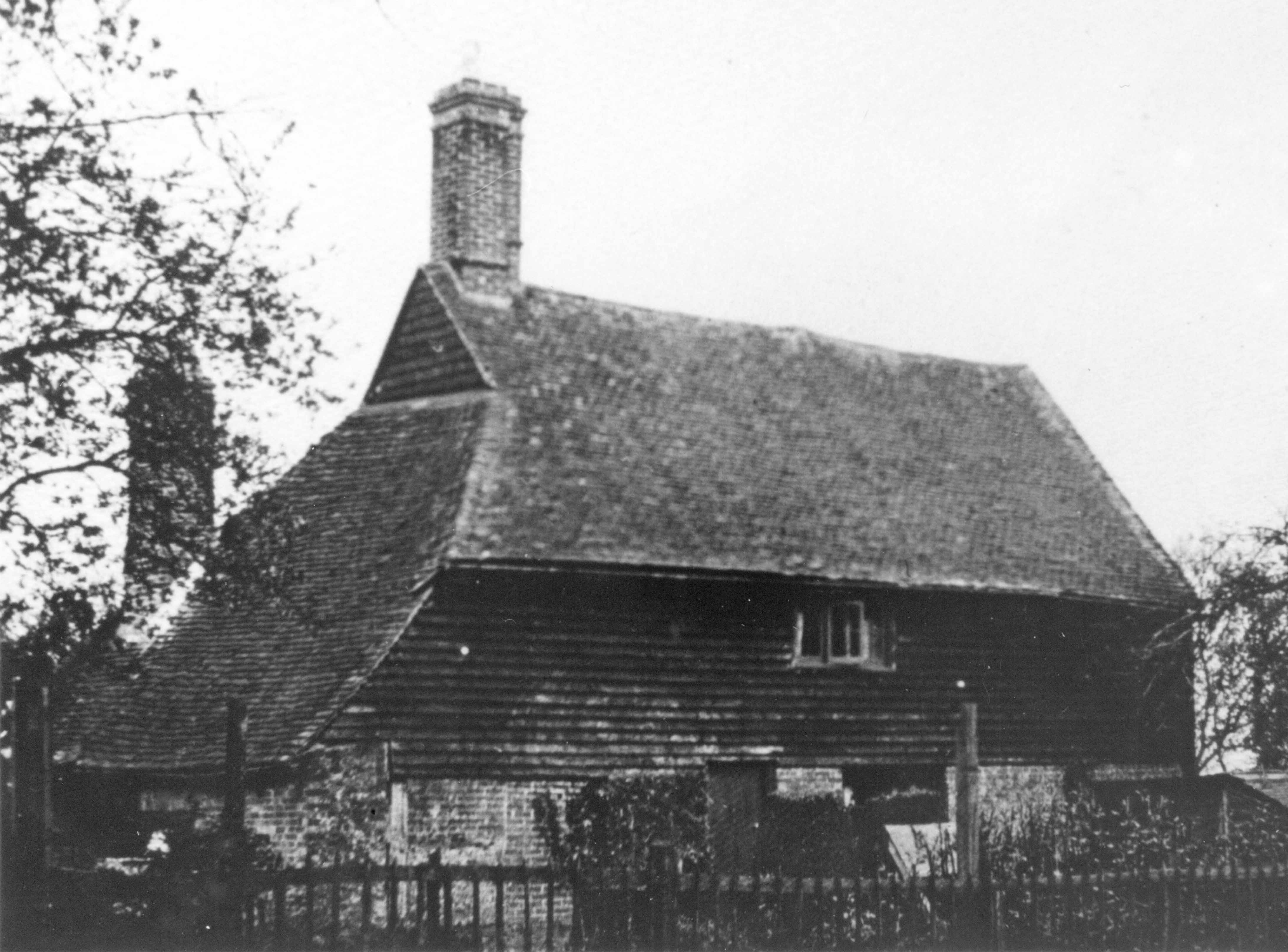
Burleigh House was another building of similar age and style. It stood at the end of Burleigh Lane, where there is a 20th century building in its place because in about 1936 the medieval house became unsafe and was demolished. A local historian, the late R. T. Mason, recorded the house in the pages of the now-defunct Sussex County Magazine, and years later he was kind enough to give me the photos he took of it. Typical of such buildings was the steep angled roof with the little ‘gablets’ at each end where the smoke from the hall fire would have escaped in the days before houses had chimneys. At some point in its later history a chimney was added and an extension to the house on its south side.
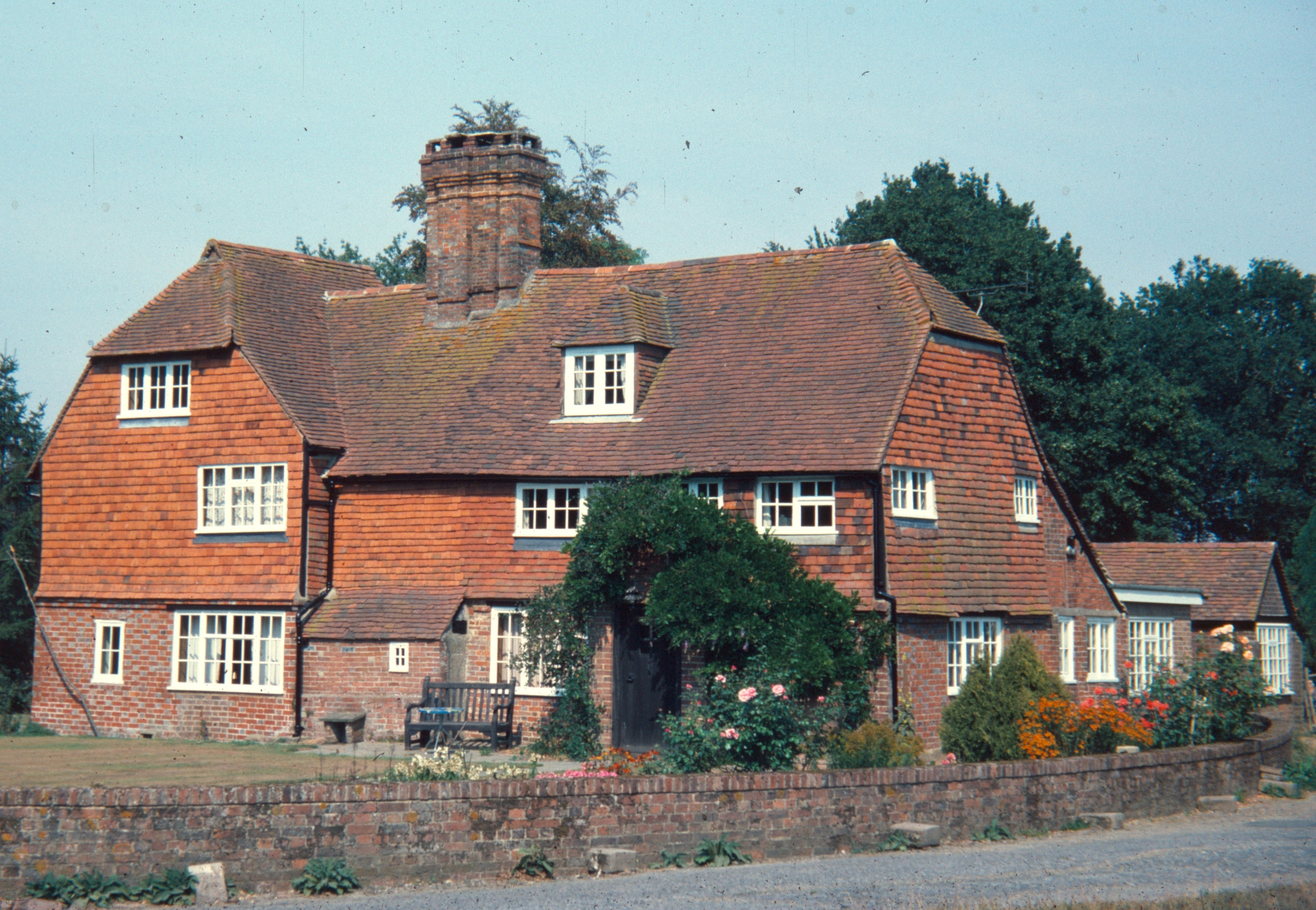
Hophurst farmhouse, near the corner where Hophurst Lane becomes Hophurst Hill, did not have a chimney either when it was first built in about 1530, but it did have a place for a fire at one end of the house, rather than in the middle of an open hall, and a separate section of the structure through which the smoke could rise. This was called a smoke bay and the evidence for it – soot encrusted rafters – was seen in 1979 when children from the Junior School undertook a project to study the history of the farm. Probably at the end of the Tudor period, and as with Burleigh House, a wing was added, this time at the north end of the house, and a brick chimney inserted between the older and newer parts.
At about the same time that Hophurst farmhouse was extended Sandhill Gate farmhouse was built. Now called Burleigh Cottage, at the junction of Sandhill and Burleigh Lanes, it took its original name from the fact that it stood by the gate that gave access from Sandhill onto the south-east corner of Crawley Down, then a stretch of common land. Those with appropriate rights could graze their animals on the Down and the gate prevented them from straying. There is a reference in the churchwarden’s accounts of Worth parish in 1599 to a meeting ‘at the house of John Nicholas at Sandhill Gate’.